List Entry Information
Status
Listed
List Entry Status
Historic Place Category 1
Access
Able to Visit
List Number
4401
Date Entered
24th March 1988
Date of Effect
24th March 1988
City/District Council
Dunedin City
Region
Otago Region
Legal description
Lot 6 DP 21969
Status
Listed
List Entry Status
Historic Place Category 1
Access
Able to Visit
List Number
4401
Date Entered
24th March 1988
Date of Effect
24th March 1988
City/District Council
Dunedin City
Region
Otago Region
Legal description
Lot 6 DP 21969
Why is this place significant?
Historic Significance
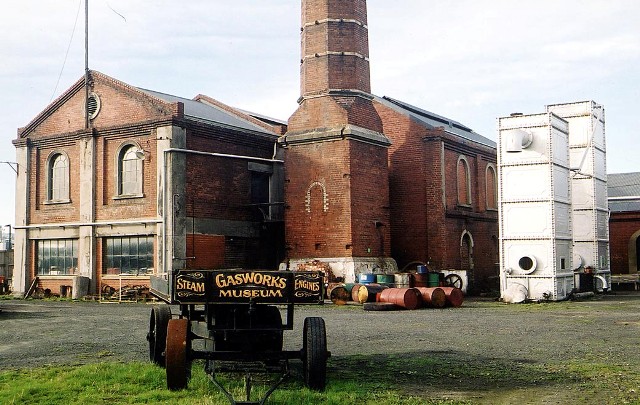
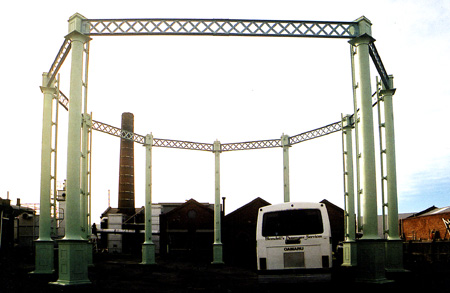
Historical Significance or Value The Dunedin Gasworks was the first gasworks in the country to produce gas, opening in 1863. It was owned initially by the Dunedin Gaslight and Coke Company, operating under its manager and engineer, Stephen Stamp Hutchinson. After agitation from the customers, the works were bought by the Dunedin City Corporation in 1876 and have been run as the city gasworks ever since. Hutchinson did build a rival gasworks at Caversham and had a contract to supply Caversham, Mornington, Roslyn and Maori Hill. This contract expired in 1907 and the city took over the Caversham works which have now been demolished. It was on the advice of the gasworks manager, H B Courtis, that a carburetted water-gas plant was bought at the cost of 11,000 pounds in 1899 to supplement the usual production methods. Presumably the building was constructed about 1900 to house this new plant. It was not in existence when a photograph of its site was taken in 1898 and in the newspaper report of 1 April 1903, the water gas plant is described as about two years old. The central part of the building, which was destroyed by the explosion on 31 March 1903, had housed the purifiers and had open archways. The two end rooms were the exhauster room (south end) and the meter room (north end). The explosion threw concrete, bricks, pieces of wood, glass and slates over the gasworks yard and blew out the windows of the houses on Braemar Street immediately behind the purifier. One of the small cottages on Braemar Street was shifted on its foundations.
Physical Significance
Architectural Significance: A early example of this type of industrial brick building in New Zealand. Townscape/landmark significance: This building is well inside the gasworks complex and not visible from the street.
Why is this place significant?
Historic Significance
Historical Significance or Value The Dunedin Gasworks was the first gasworks in the country to produce gas, opening in 1863. It was owned initially by the Dunedin Gaslight and Coke Company, operating under its manager and engineer, Stephen Stamp Hutchinson. After agitation from the customers, the works were bought by the Dunedin City Corporation in 1876 and have been run as the city gasworks ever since. Hutchinson did build a rival gasworks at Caversham and had a contract to supply Caversham, Mornington, Roslyn and Maori Hill. This contract expired in 1907 and the city took over the Caversham works which have now been demolished. It was on the advice of the gasworks manager, H B Courtis, that a carburetted water-gas plant was bought at the cost of 11,000 pounds in 1899 to supplement the usual production methods. Presumably the building was constructed about 1900 to house this new plant. It was not in existence when a photograph of its site was taken in 1898 and in the newspaper report of 1 April 1903, the water gas plant is described as about two years old. The central part of the building, which was destroyed by the explosion on 31 March 1903, had housed the purifiers and had open archways. The two end rooms were the exhauster room (south end) and the meter room (north end). The explosion threw concrete, bricks, pieces of wood, glass and slates over the gasworks yard and blew out the windows of the houses on Braemar Street immediately behind the purifier. One of the small cottages on Braemar Street was shifted on its foundations.
Physical Significance
Architectural Significance: A early example of this type of industrial brick building in New Zealand. Townscape/landmark significance: This building is well inside the gasworks complex and not visible from the street.
Construction Details
Start Year
1900
startYearCirca
Type
Original Construction
Construction Materials
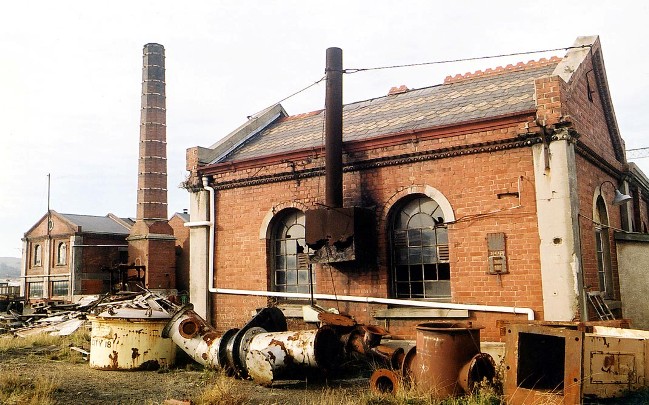
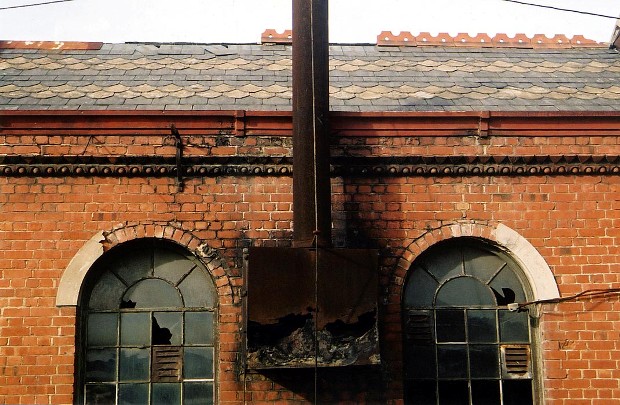
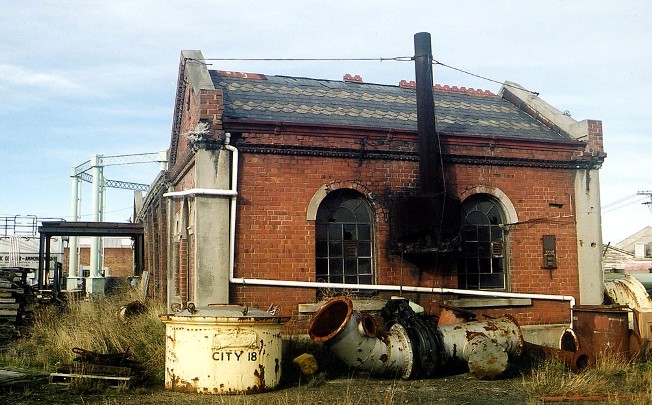
The walls are triple brick and the roof covered with slates in alternate bands of grey square and buff fish tail slates. There is a line of ornate orange tiles along the ridge line. The building is about 29 metres long and 8 metres wide, with cross gables at both ends. The long middle section has seven round headed arches which are now filled with concrete blocks and simple windows and two small doors. The bays at each end have pointed gables and arched doors. The western gable houses a smithy with an old forge and anvil on a dirt floor. There are two narrow arched windows on each side of the door in each bay. The windows are topped by sunbursts in plain glass. There is a decorative frieze of terracotta tiles round the building similar to the one around the middle gable of the exhauster house and on the interior wall of the boilerhouse. Along the back wall there were arched windows and two doors similar to the ones along the front. There are bevelled concrete mouldings around the doors and windows.
Notable Features
Its age and position in an early industrial complex.
Construction Details
Start Year
1900
startYearCirca
Type
Original Construction
Construction Materials
The walls are triple brick and the roof covered with slates in alternate bands of grey square and buff fish tail slates. There is a line of ornate orange tiles along the ridge line. The building is about 29 metres long and 8 metres wide, with cross gables at both ends. The long middle section has seven round headed arches which are now filled with concrete blocks and simple windows and two small doors. The bays at each end have pointed gables and arched doors. The western gable houses a smithy with an old forge and anvil on a dirt floor. There are two narrow arched windows on each side of the door in each bay. The windows are topped by sunbursts in plain glass. There is a decorative frieze of terracotta tiles round the building similar to the one around the middle gable of the exhauster house and on the interior wall of the boilerhouse. Along the back wall there were arched windows and two doors similar to the ones along the front. There are bevelled concrete mouldings around the doors and windows.
Notable Features
Its age and position in an early industrial complex.
Architect/Engineer/Designer: Presumably the City Engineer and Gas Works Manager of the period. These were S H Mirams and H B Courtis. Significance of Architect/Engineer/ Designer: S H Mirams was officially the City Surveyor from 1861 to 1901 but carried out the work of the City Engineer. He had come from Australia in 1861 and was the designer in 1873 of the Town Belt in its present form. He also designed, as instructed, the basic town sewage system which allowed combined sewers and storm water drains of the central business area to discharge into the harbour. He emphasised though, that his plan did not preclude a major intercepting drain to carry the sewage to an ocean outfall. H B Courtis was manager of the gasworks from 1893-1906 and was the son of the man who had reported on the works in 1875. Architectural Description (style): Gothic industrial or "pumphouse styling" with use of ridge tiles more appropriate to Queen Anne styled villas of the period. Modifications: The building suffered a major explosion in 1903 but seems to have been rebuilt to its original plan. The exterior had been modified in obvious ways such as blocking up the old archways in the central section but otherwise the exterior is fairly unmodified. The interior had been changed to accommodate the smithy and fitting shop.
Architect/Engineer/Designer: Presumably the City Engineer and Gas Works Manager of the period. These were S H Mirams and H B Courtis. Significance of Architect/Engineer/ Designer: S H Mirams was officially the City Surveyor from 1861 to 1901 but carried out the work of the City Engineer. He had come from Australia in 1861 and was the designer in 1873 of the Town Belt in its present form. He also designed, as instructed, the basic town sewage system which allowed combined sewers and storm water drains of the central business area to discharge into the harbour. He emphasised though, that his plan did not preclude a major intercepting drain to carry the sewage to an ocean outfall. H B Courtis was manager of the gasworks from 1893-1906 and was the son of the man who had reported on the works in 1875. Architectural Description (style): Gothic industrial or "pumphouse styling" with use of ridge tiles more appropriate to Queen Anne styled villas of the period. Modifications: The building suffered a major explosion in 1903 but seems to have been rebuilt to its original plan. The exterior had been modified in obvious ways such as blocking up the old archways in the central section but otherwise the exterior is fairly unmodified. The interior had been changed to accommodate the smithy and fitting shop.
Historical and Associated Iwi / Hapū / Whānau
Information Sources
McDonald, 1965
K C McDonald, City of Dunedin: A Century of Civic Enterprise, Dunedin City Corporation, Dunedin, 1965
Otago Daily Times
Otago Daily Times, 1 Jun 1915, p.10.
Otago Witness
Otago Witness
Other Information
This historic place was registered under the Historic Places Act 1980. The report includes the text from the original Building Classification Committee report considered by the NZHPT Board at the time of registration. Please note that entry on the New Zealand Heritage List/Rarangi Korero identifies only the heritage values of the property concerned, and should not be construed as advice on the state of the property, or as a comment of its soundness or safety, including in regard to earthquake risk, safety in the event of fire, or insanitary conditions.
Historical and Associated Iwi / Hapū / Whānau
Information Sources
McDonald, 1965
K C McDonald, City of Dunedin: A Century of Civic Enterprise, Dunedin City Corporation, Dunedin, 1965
Otago Daily Times
Otago Daily Times, 1 Jun 1915, p.10.
Otago Witness
Otago Witness
Other Information
This historic place was registered under the Historic Places Act 1980. The report includes the text from the original Building Classification Committee report considered by the NZHPT Board at the time of registration. Please note that entry on the New Zealand Heritage List/Rarangi Korero identifies only the heritage values of the property concerned, and should not be construed as advice on the state of the property, or as a comment of its soundness or safety, including in regard to earthquake risk, safety in the event of fire, or insanitary conditions.
Current Usages
Uses: Civic Facilities
Specific Usage: Museum
Web Links
description:
description: Engineering NZ Heritage
url: https://www.engineeringnz.org/our-work/heritage/heritage-register/dunedin-gasworks/
Current Usages
Uses: Civic Facilities
Specific Usage: Museum
Web Links
description:
description: Engineering NZ Heritage
url: https://www.engineeringnz.org/our-work/heritage/heritage-register/dunedin-gasworks/